


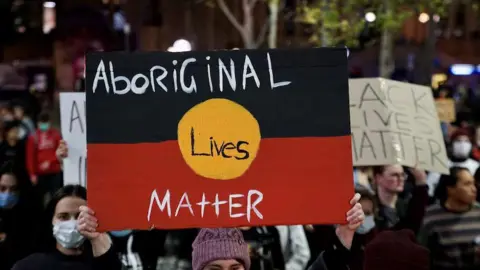
The tally of Indigenous people dying while in custody in Australia has reached its highest point since records started in 1980.
New data reveal that 33 of the 113 individuals who died in custody in the 12-month period leading up to June were of Aboriginal or Torres Strait Islander descent. This marks an rise from 24 deaths in the previous corresponding period.
Aboriginal and Torres Strait Islander people are disproportionately represented in the justice system. They make up over 33% of all incarcerated individuals, despite representing less than four per cent of the country's people.
These disturbing numbers emerge more than three decades after a seminal royal commission into First Nations deaths in custody, which put forward hundreds of recommendations.
Breakdown of the Recent Statistics
Of the 33 Indigenous deaths in custody logged between last July and this June, twenty-six occurred while in prison custody, which is an rise from 18 in the previous year.
One death occurred in youth detention, and all except one of the individuals were men.
The remaining six fatalities happened in the custody of law enforcement, defined as when someone passes away while police are detaining them.
The leading cause of First Nations deaths was categorised as "self-harm," followed by "illness." The data noted that asphyxiation was the method in eight of the deaths.
Geographic Distribution
The state of New South Wales had the greatest number of Aboriginal deaths in prison custody with nine, then Western Australia with six. Queensland, South Australia, and the Australian Capital Territory all recorded three deaths.
The rising number of Indigenous deaths in custody in New South Wales is a "deeply distressing reality," the state's coroner has remarked.
In October, Magistrate Teresa O'Sullivan emphasised that this upward trend was not "just statistics" and that these deaths demanded "independent and careful scrutiny, dignity and responsibility."
Demographic Information and Academic Reaction
The average age of those who died was 45 years, and 11 of the deceased were awaiting a court sentencing.
A criminal law expert, Amanda Porter, characterised the data as representing a "national crisis" that needs "decisive action and political action."
Ms. Porter, who has attended several coronial inquests with grieving families, said very little has improved since the 1991's royal commission that was established to address this crisis.
"It's infuriating to see the number of investigations I attend, the many funerals families have to attend, and the fact that we are 30 years past the royal commission, and the problem is getting progressively worse," she commented.
Since the landmark inquiry, a total of 600 First Nations people have lost their lives in detention, which encompasses six in juvenile detention centers, as per the report.


